


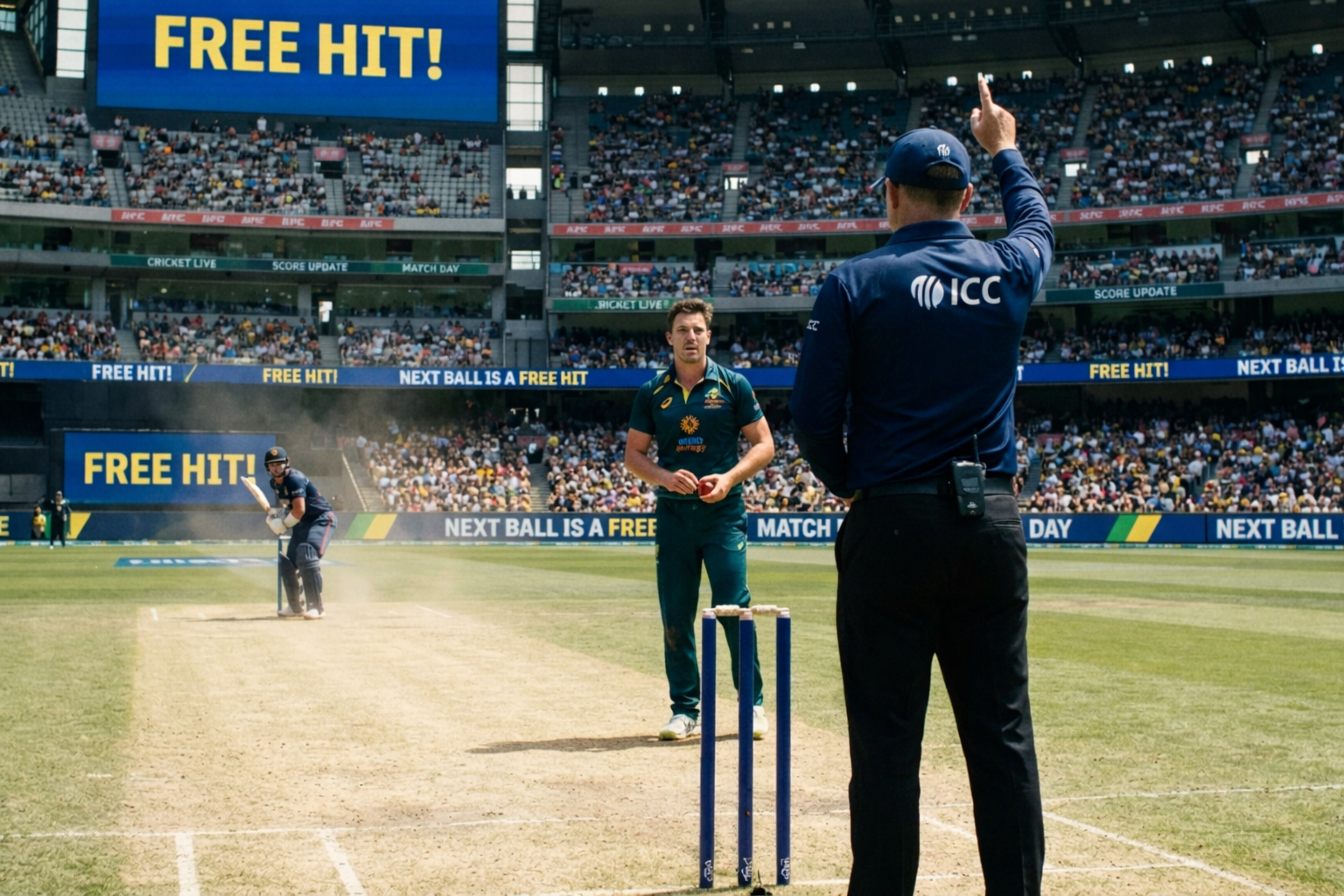
A free hit in cricket is a delivery where the batter cannot be dismissed by any method except run-out, awarded after a no-ball is bowled. It applies mainly in ODI and T20 formats and gives the batter a risk-free scoring opportunity.
What Is a Free Hit in Cricket?
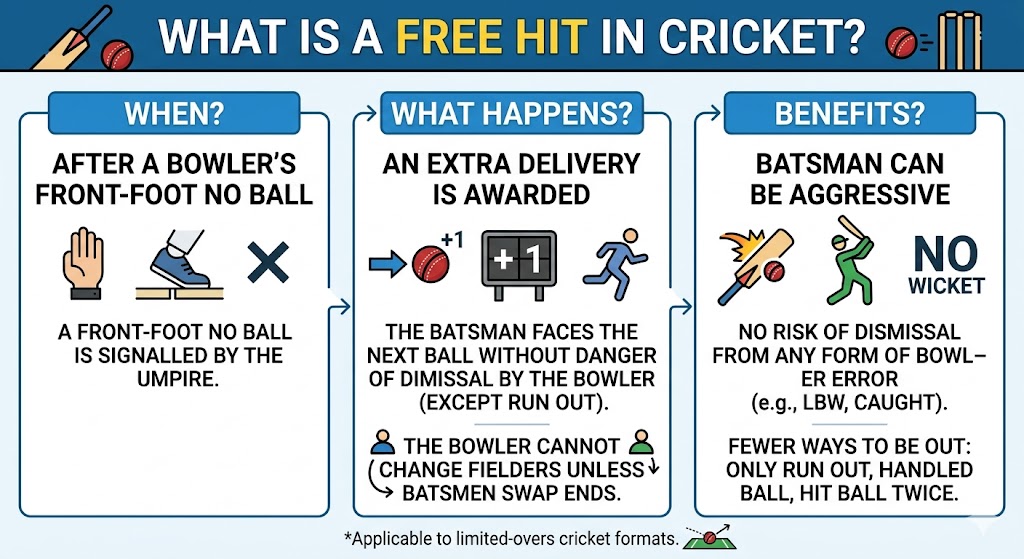
A free hit is a rule introduced by the International Cricket Council to penalize illegal deliveries (no-balls) and reward batters with a scoring advantage.
When a bowler delivers a no-ball:
- The batting team gets 1 extra run
- The next delivery becomes a free hit
👉 On that ball, the batter cannot be dismissed by:
- Bowled
- Caught
- LBW
- Stumped
Only run-out remains possible.
How Free Hit Works — Step by Step
Free hits follow a clear sequence that begins with an illegal delivery and extends through the next legal ball. Here’s exactly how the process unfolds:
| Step | Action | Outcome |
|---|---|---|
| 1 | Bowler delivers a no-ball | 1 run added |
| 2 | Umpire signals free hit | Next ball is protected |
| 3 | Batter plays aggressively | No risk of standard dismissal |
| 4 | Ball completed | Game returns to normal |
| 5 | Another no-ball? | Free hit continues |
Free Hit Rules Explained
The ICC Laws of Cricket (Law 21.1-21.9) establish detailed regulations around free hits to ensure consistent application across all formats and competitions worldwide.
1. No-Ball Triggers Free Hit
- Most common: front foot overstep
- Also includes dangerous deliveries
2. Only Run-Out Is Allowed
Even on a free hit:
- Poor running = still out
3. Formats Where It Applies
- ✅ T20 Internationals
- ✅ ODIs
- ❌ Test matches
4. Continuous Free Hits
If another no-ball occurs:
👉 The next ball is also a free hit
5. Field Restrictions Stay Same
- No special defensive changes allowed
When Does Free Hit Apply?
| Format | Free Hit Rule |
|---|---|
| T20 | Yes (most impactful) |
| ODI | Yes |
| Test | No |
Real-World Example
During the ICC Cricket World Cup 2019:
- A bowler overstepped → no-ball
- Free hit awarded
- Batter smashed a six without risk
👉 This single moment shifted match momentum — proving how powerful free hits can be.
Tactical Importance of Free Hits
For Batters
Top players like Virat Kohli and Babar Azam:
- Target boundaries
- Pre-plan aggressive shots
- Exploit field gaps
For Bowlers
Even elite bowlers like Pat Cummins:
- Avoid risky deliveries
- Focus on yorkers or wide lines
- Prevent back-to-back no-balls
Common Mistakes and Misconceptions
❌ Myth 1: Batter Cannot Be Out at All
✔️ Truth: Run-out is still possible
❌ Myth 2: Every No-Ball Means Unlimited Free Hits
✔️ Truth: Only the next legal delivery is a free hit
❌ Myth 3: Applies in Test Cricket
✔️ Truth: Not used in Tests
Why This Matters for Your Fan Experience
Free hits:
- Increase scoring rates dramatically
- Shift match momentum instantly
- Reward aggressive batting
- Penalize poor bowling discipline
👉 In T20 cricket, even 1 free hit can decide a match.
Key Takeaways
- Free hit follows a no-ball
- Batter cannot be dismissed except run-out
- Applies only in ODI & T20
- Encourages aggressive batting
- Punishes bowling errors instantly
