

TITLE: What Is a Doosra in Cricket? The Off-Spinner’s Secret Weapon
META: A doosra is an off-spinner’s deceptive bowling delivery that turns sharply in the opposite direction to a regular off-break, confusing batsmen with unexpected spin variation.
SLUG: what-is-doosra-in-cricket
CONTENT:
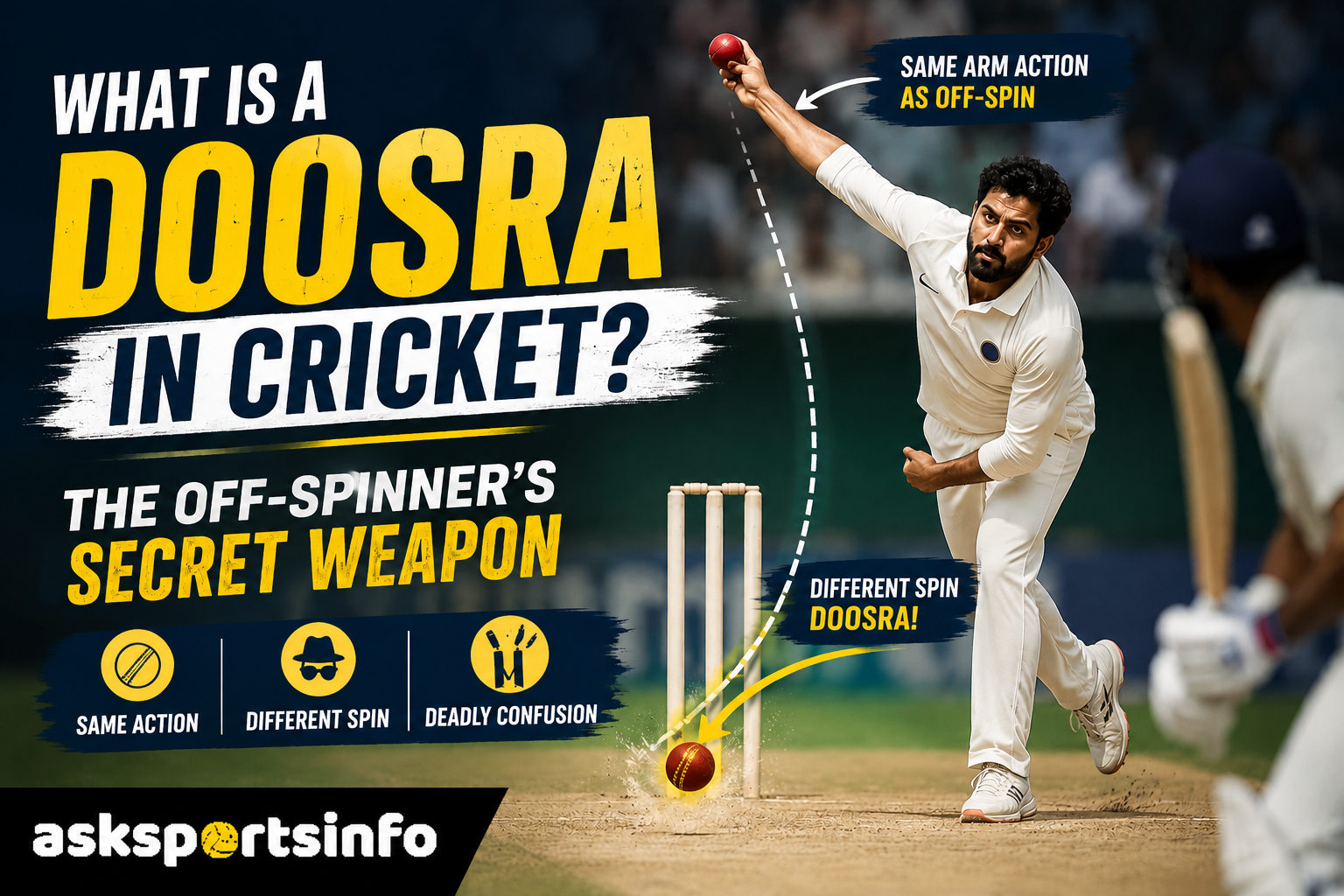
A doosra in cricket is a deceptive bowling delivery bowled by off-spinners that spins sharply away from right-handed batsmen in the opposite direction to a standard off-break. The ball suddenly changes direction mid-flight, creating confusion for the batter. This variation delivery can turn a match decisively in the bowler’s favour when executed perfectly.
What Is a Doosra?
The doosra (meaning “second” in Hindi and Urdu) is a mystery delivery that off-spinners use to deceive batsmen. The bowler grips and releases the ball differently than a standard off-break. Instead of spinning away from right-handed batsmen, the doosra spins sharply back toward them.
The ICC (International Cricket Council) and the BCCI (Board of Control for Cricket in India) regulate this delivery closely. The doosra emerged prominently in international cricket during the early 2000s. Pakistani and Indian off-spinners made this variation famous by using it to take crucial wickets in Test matches and limited-overs cricket.
How the Doosra Works — Step by Step
Understanding the mechanics of the doosra helps you appreciate why batsmen struggle against this delivery:
- The Setup: The off-spinner runs up to the crease bowls from over the wicket. The batsman expects a standard off-break that turns away from the right-handed batter.
- The Grip Change: The bowler adjusts their finger grip on the seam and the release point slightly. This subtle change deceives the batsman’s eyes and brain.
- The Release: The bowler delivers the ball with a different wrist and finger position. The ball leaves the hand with backspin variation instead of normal spin.
- The Flight: The ball travels through the air looking identical to a regular off-break. The bowling technique appears unchanged to the watching batsman.
- The Deception: After pitching, the ball suddenly turns sharply back toward the batsman. The unexpected change in direction beats the batter’s defensive shot attempt.
Key Rules You Must Know
The ICC Laws of Cricket govern how off-spinners can bowl the doosra. These regulations protect the game’s integrity and fair play.
- Rule 1 – Arm Position Requirement: The bowler must deliver the ball with a straight arm at release. Any excessive bending of the elbow during delivery gets called as a “no-ball” by the umpire. The ICC defines the maximum elbow bend allowed at 15 degrees from full extension.
- Rule 2 – Consistent Bowling Action: The bowler’s arm position for the doosra must match their action for other deliveries. The ICC introduced action analysis technology to verify this consistency during international matches.
- Rule 3 – No-Ball Call: If an umpire suspects the doosra involves excessive throwing (bent arm), they signal a no-ball. The batsman scores a free run and can continue batting without risk of dismissal on that delivery.
- Rule 4 – Technology Review: Players can appeal to the ICC’s bowling action committee if they dispute doosra legality. ICC Cricket uses high-speed cameras recording at 960 frames per second to analyse arm bend.
- Rule 5 – Format Differences: The doosra is legal in Test cricket, One Day Internationals, and T20 International matches. The same arm-straightness rules apply across all formats equally.
Real-World Example
Muttiah Muralitharan, the legendary Sri Lankan off-spinner, perfected the doosra and used it to devastate batsmen worldwide. In a 2006 Test match against England, Muralitharan bowled a doosra to Kevin Pietersen that suddenly turned sharply back. Pietersen expected the ball to turn away but found himself completely deceived, resulting in an edge to the slips.
This moment exemplifies why the doosra revolutionised off-spin bowling and changed how batsmen prepared to face spinners. Understanding spin bowling variations like the doosra helps fans appreciate the tactical battle between bowler and batter. Muralitharan’s mastery of this delivery made him one of cricket’s all-time greatest bowlers with 800 Test wickets.
Common Mistakes and Misconceptions
Many fans confuse the doosra with a googly, thinking both deliveries spin back toward the right-handed batter. The key difference is that a googly bowled by leg-spinners rotates differently than a doosra bowled by off-spinners. A googly requires completely different finger positions and wrist rotation compared to the doosra.
Another common mistake is believing the doosra always turns more sharply than regular off-breaks. In reality, the deception comes from the unexpected direction change, not necessarily sharper turn. Some bowlers disguise the doosra so cleverly that batsmen cannot detect it spinning differently until it pitches.
Why This Matters for Your Fan Experience
Knowing about the doosra transforms how you watch cricket matches featuring quality off-spinners. You’ll spot the subtle grip and release changes that signal a doosra is coming. This knowledge lets you predict what might happen next and appreciate the bowler’s craft.
The doosra remains crucial in IPL (Indian Premier League) cricket where spinners dominate middle overs. Fans across South and Southeast Asia cherish off-spin bowling, making understanding the doosra essential for any serious cricket watcher. When you recognize the doosra’s arrival, you join millions of cricket lovers who appreciate bowling strategy at its finest.
Frequently Asked Questions
Who invented the doosra in cricket?
Saqlain Mushtaq, the Pakistani off-spinner, invented and popularized the doosra in international cricket during the late 1990s. Muttiah Muralitharan later perfected the delivery and used it throughout his legendary career. Both spinners changed cricket by demonstrating how devastating this variation could be against world-class batsmen.
Is the doosra legal in cricket?
Yes, the doosra is legal provided the bowler’s arm remains straight during delivery without excessive elbow bend. The ICC permits the doosra in all cricket formats including Test, ODI, and T20 International matches. However, many bowlers have had their doosra reported to match officials for potential “chucking” violations requiring investigation.
What happens if a bowler bowls an illegal doosra?
If an umpire suspects the doosra involves excessive arm bend, they call a no-ball, which means the batsman scores a free run. The ICC can also report a bowler’s action for further investigation using slow-motion technology. If the bowler is found guilty of illegal action, they face suspension from international cricket until their bowling action improves.
How is the doosra different from a googly?
The doosra is bowled by off-spinners and spins back toward right-handed batsmen opposite to their normal off-break. A googly is bowled by leg-spinners and requires different wrist and finger positions entirely. Both deliveries deceive batsmen, but they come from different bowling styles and require completely different techniques to execute.
Which modern cricketers bowl the doosra effectively?
Ravichandran Ashwin, the Indian off-spinner, bowls the doosra effectively in international and IPL cricket. Nabi Zadran of Afghanistan also uses the doosra as a key weapon in his bowling arsenal. These spinners demonstrate that the doosra remains relevant in modern cricket at the highest levels of competition.
TITLE: What Is a Doosra in Cricket? The Off-Spinner’s Secret Weapon
META: A doosra is an off-spinner’s deceptive bowling delivery that turns sharply in the opposite direction to a regular off-break, confusing batsmen with unexpected spin variation.
SLUG: what-is-doosra-in-cricket
CONTENT:
A doosra in cricket is a deceptive bowling delivery bowled by off-spinners that spins sharply away from right-handed batsmen in the opposite direction to a standard off-break. The ball suddenly changes direction mid-flight, creating confusion for the batter. This variation delivery can turn a match decisively in the bowler’s favour when executed perfectly.
What Is a Doosra?
The doosra (meaning “second” in Hindi and Urdu) is a mystery delivery that off-spinners use to deceive batsmen. The bowler grips and releases the ball differently than a standard off-break. Instead of spinning away from right-handed batsmen, the doosra spins sharply back toward them.
The ICC (International Cricket Council) and the BCCI (Board of Control for Cricket in India) regulate this delivery closely. The doosra emerged prominently in international cricket during the early 2000s. Pakistani and Indian off-spinners made this variation famous by using it to take crucial wickets in Test matches and limited-overs cricket.
How the Doosra Works — Step by Step
Understanding the mechanics of the doosra helps you appreciate why batsmen struggle against this delivery:
- The Setup: The off-spinner runs up to the crease bowls from over the wicket. The batsman expects a standard off-break that turns away from the right-handed batter.
- The Grip Change: The bowler adjusts their finger grip on the seam and the release point slightly. This subtle change deceives the batsman’s eyes and brain.
- The Release: The bowler delivers the ball with a different wrist and finger position. The ball leaves the hand with backspin variation instead of normal spin.
- The Flight: The ball travels through the air looking identical to a regular off-break. The bowling technique appears unchanged to the watching batsman.
- The Deception: After pitching, the ball suddenly turns sharply back toward the batsman. The unexpected change in direction beats the batter’s defensive shot attempt.
Key Rules You Must Know
The ICC Laws of Cricket govern how off-spinners can bowl the doosra. These regulations protect the game’s integrity and fair play.
- Rule 1 – Arm Position Requirement: The bowler must deliver the ball with a straight arm at release. Any excessive bending of the elbow during delivery gets called as a “no-ball” by the umpire. The ICC defines the maximum elbow bend allowed at 15 degrees from full extension.
- Rule 2 – Consistent Bowling Action: The bowler’s arm position for the doosra must match their action for other deliveries. The ICC introduced action analysis technology to verify this consistency during international matches.
- Rule 3 – No-Ball Call: If an umpire suspects the doosra involves excessive throwing (bent arm), they signal a no-ball. The batsman scores a free run and can continue batting without risk of dismissal on that delivery.
- Rule 4 – Technology Review: Players can appeal to the ICC’s bowling action committee if they dispute doosra legality. ICC Cricket uses high-speed cameras recording at 960 frames per second to analyse arm bend.
- Rule 5 – Format Differences: The doosra is legal in Test cricket, One Day Internationals, and T20 International matches. The same arm-straightness rules apply across all formats equally.
Real-World Example
Muttiah Muralitharan, the legendary Sri Lankan off-spinner, perfected the doosra and used it to devastate batsmen worldwide. In a 2006 Test match against England, Muralitharan bowled a doosra to Kevin Pietersen that suddenly turned sharply back. Pietersen expected the ball to turn away but found himself completely deceived, resulting in an edge to the slips.
This moment exemplifies why the doosra revolutionised off-spin bowling and changed how batsmen prepared to face spinners. Understanding spin bowling variations like the doosra helps fans appreciate the tactical battle between bowler and batter. Muralitharan’s mastery of this delivery made him one of cricket’s all-time greatest bowlers with 800 Test wickets.
Common Mistakes and Misconceptions
Many fans confuse the doosra with a googly, thinking both deliveries spin back toward the right-handed batter. The key difference is that a googly bowled by leg-spinners rotates differently than a doosra bowled by off-spinners. A googly requires completely different finger positions and wrist rotation compared to the doosra.
Another common mistake is believing the doosra always turns more sharply than regular off-breaks. In reality, the deception comes from the unexpected direction change, not necessarily sharper turn. Some bowlers disguise the doosra so cleverly that batsmen cannot detect it spinning differently until it pitches.
Why This Matters for Your Fan Experience
Knowing about the doosra transforms how you watch cricket matches featuring quality off-spinners. You’ll spot the subtle grip and release changes that signal a doosra is coming. This knowledge lets you predict what might happen next and appreciate the bowler’s craft.
The doosra remains crucial in IPL (Indian Premier League) cricket where spinners dominate middle overs. Fans across South and Southeast Asia cherish off-spin bowling, making understanding the doosra essential for any serious cricket watcher. When you recognize the doosra’s arrival, you join millions of cricket lovers who appreciate bowling strategy at its finest.
Frequently Asked Questions
Who invented the doosra in cricket?
Saqlain Mushtaq, the Pakistani off-spinner, invented and popularized the doosra in international cricket during the late 1990s. Muttiah Muralitharan later perfected the delivery and used it throughout his legendary career. Both spinners changed cricket by demonstrating how devastating this variation could be against world-class batsmen.
Is the doosra legal in cricket?
Yes, the doosra is legal provided the bowler’s arm remains straight during delivery without excessive elbow bend. The ICC permits the doosra in all cricket formats including Test, ODI, and T20 International matches. However, many bowlers have had their doosra reported to match officials for potential “chucking” violations requiring investigation.
What happens if a bowler bowls an illegal doosra?
If an umpire suspects the doosra involves excessive arm bend, they call a no-ball, which means the batsman scores a free run. The ICC can also report a bowler’s action for further investigation using slow-motion technology. If the bowler is found guilty of illegal action, they face suspension from international cricket until their bowling action improves.
How is the doosra different from a googly?
The doosra is bowled by off-spinners and spins back toward right-handed batsmen opposite to their normal off-break. A googly is bowled by leg-spinners and requires different wrist and finger positions entirely. Both deliveries deceive batsmen, but they come from different bowling styles and require completely different techniques to execute.
Which modern cricketers bowl the doosra effectively?
Ravichandran Ashwin, the Indian off-spinner, bowls the doosra effectively in international and IPL cricket. Nabi Zadran of Afghanistan also uses the doosra as a key weapon in his bowling arsenal. These spinners demonstrate that the doosra remains relevant in modern cricket at the highest levels of competition.