


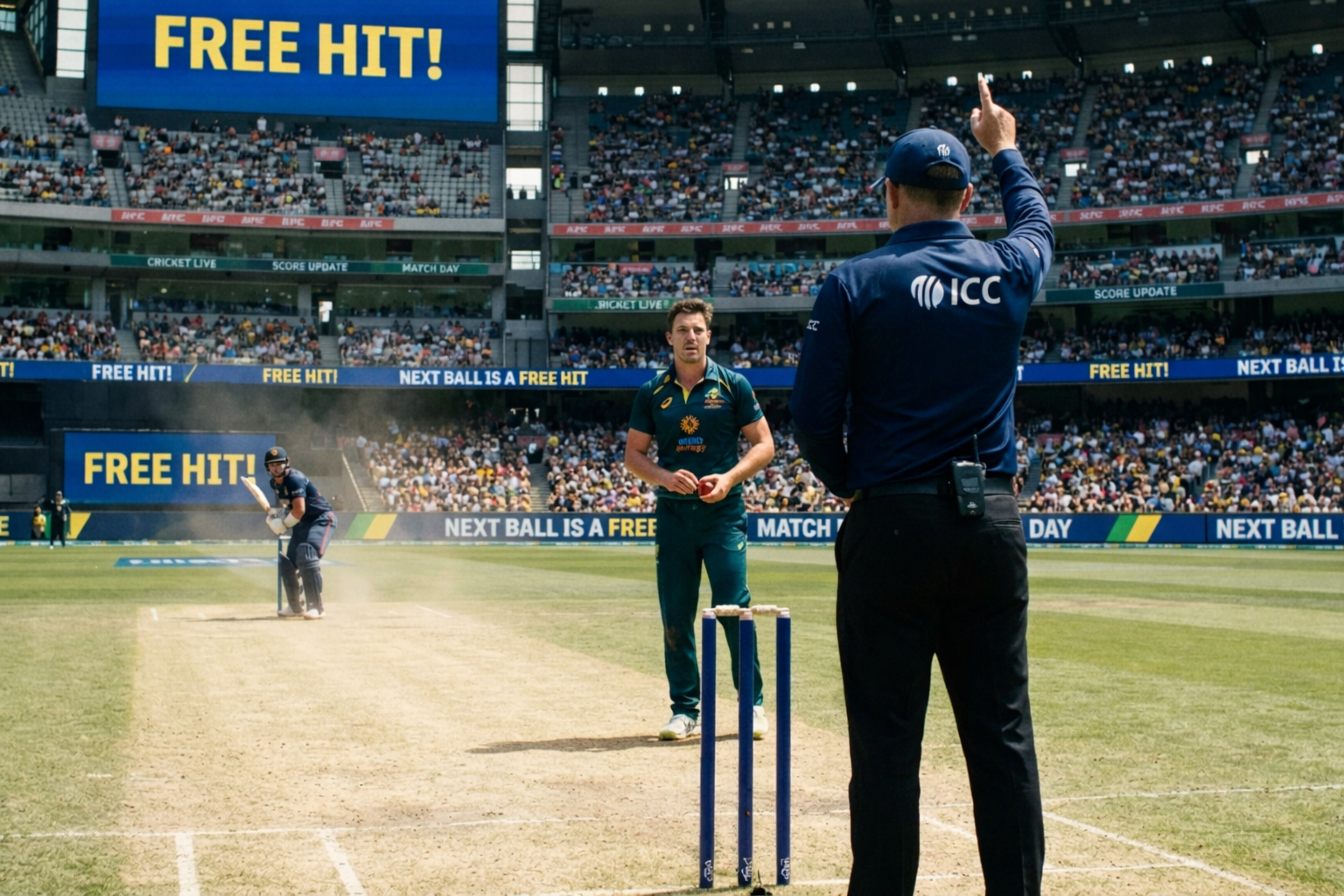
A free hit in cricket is a batting opportunity where the batter cannot be dismissed by any mode except run-out, awarded after the bowler delivers a no-ball. This rule was introduced by the ICC (International Cricket Council) to penalize bowlers who bowl illegally and reward batters with an extra scoring opportunity. Understanding free hits is essential for appreciating modern cricket, especially in limited-overs formats where aggressive batting is celebrated.
What Is a Free Hit?
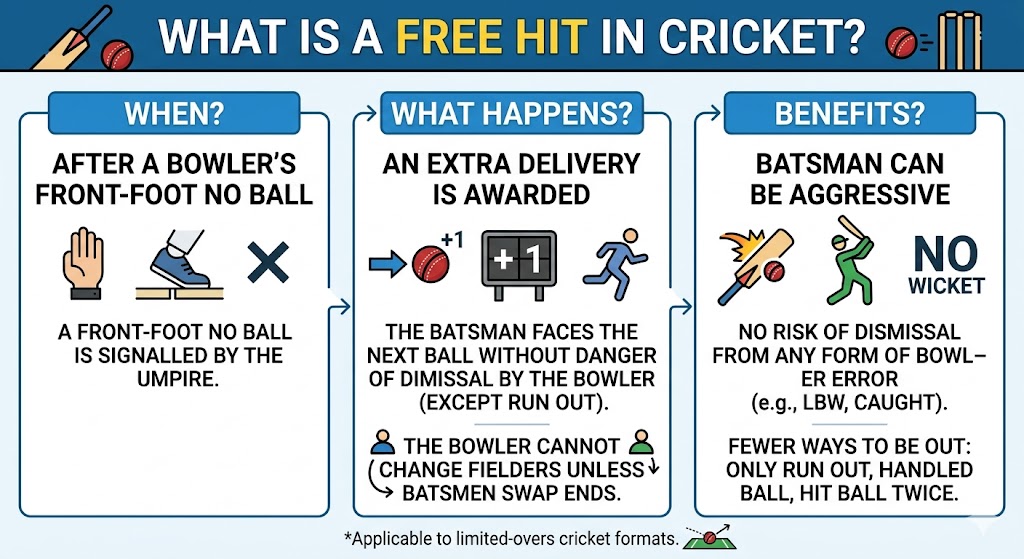
The free hit is a protective measure in cricket designed to penalize illegal bowling deliveries while giving batters a genuine chance to score freely. According to the ICC Laws of Cricket, when a bowler delivers a no-ball (typically for overstepping the crease or bowling dangerously), the batter receives a free hit on the next legal delivery. The batter can score runs without fear of dismissal through catches, LBW (leg before wicket), bowled, or other conventional dismissal modes—only a run-out remains possible. This rule fundamentally changed how cricket is played in T20 and ODI formats by encouraging aggressive batting and making bowlers more accountable for illegal deliveries. The free hit concept represents modern cricket’s shift toward entertainment and fair play, where bowlers must maintain discipline or face immediate tactical consequences. Understanding LBW rules helps you appreciate why batters can bat so freely during a free hit, knowing this particular dismissal mode is unavailable.
How Free Hit Works — Step by Step
Free hits follow a clear sequence that begins with an illegal delivery and extends through the next legal ball. Here’s exactly how the process unfolds:
- Bowler Delivers a No-Ball: The bowler overstepping the crease line (most common) or bowling a high full toss at the batter’s head triggers a no-ball decision. The umpire signals this immediately by extending one arm horizontally, and one run is automatically added to the batter’s team total.
- Free Hit Declared: Once the umpire signals the no-ball, the next delivery becomes a free hit, and the umpire communicates this clearly to both batters and fielders by signaling with both hands moving in a circular motion above their head.
- Batter Takes Strike Freely: The batter now faces the bowler knowing they cannot be dismissed through standard modes, so they can play aggressive shots without worrying about getting out caught or LBW. This typically leads to more boundary-hunting shots and higher-risk batting strategies.
- Fielding Restrictions Apply: During a free hit, standard fielding restrictions based on the match format remain in place, but bowlers cannot use aggressive short-pitched bowling as a defensive tactic since that would likely result in another no-ball and extend the batter’s protection further. While football has different protective rules, cricket’s free hit provides similar defensive safeguards to the attacking player.
- Outcome and Next Delivery: Once the free hit delivery is bowled and the batter plays it, the next ball returns to normal rules—the batter can be dismissed through any legal mode. If another no-ball occurs, another free hit is awarded, maintaining the cycle of protection.
Key Rules You Must Know
The ICC Laws of Cricket (Law 21.1-21.9) establish detailed regulations around free hits to ensure consistent application across all formats and competitions worldwide.
- Rule 1 – No-Ball Triggers Free Hit: A free hit is awarded only after a no-ball is called by the umpire. The most common cause is the bowler overstepping the crease (front foot fault), but high full tosses aimed at the batter’s head and other dangerous deliveries also trigger free hits.
- Rule 2 – Run-Out Only Exception: During a free hit, the batter can be dismissed only through run-out; all other dismissal modes (caught, bowled, LBW, stumped, handled the ball, obstructing the field) are nullified. This unique protection applies only to the designated batter on strike.
- Rule 3 – Format Application: Free hits applies only to ODIs and T20s, not Test matches, ODIs, T20s, and domestic leagues like the IPL and Big Bash. However, they’re most impactful in T20 cricket where aggressive batting and bowler accountability are paramount.
- Rule 4 – No Cumulative Dismissals: If a batter is dismissed on a free hit through an illegal mode (such as a fielder taking a catch), that dismissal is overruled and the batter continues. Check ICC Cricket’s official rulebook for the complete legal framework governing free hits.
- Rule 5 – Fielding Configuration: Fielding restrictions specified for the match format still apply during free hits; fielders cannot be repositioned as a special defensive measure just for the free hit delivery, maintaining balance between batting and bowling advantages.
Real-World Example
During the 2019 Cricket World Cup, England’s batting dominated with free hits becoming weaponized scoring opportunities. In a crucial match, an English batter faced a no-ball from a quick bowler who overstepped, and on the resulting free hit, the batter launched a six over mid-wicket without any concern about getting out. This single aggressive stroke—enabled entirely by the free hit rule—shifted momentum dramatically, demonstrating how properly executing free hit opportunities can change match outcomes, especially in high-pressure ICC tournaments where every run counts. This example illustrates why bowlers fear no-balls far beyond the single run penalty: they gift the opposition’s most dangerous batters a license to attack without defensive consequence. Understanding cricket’s broader rules framework reveals how free hits represent the modern game’s philosophy of punishing illegal bowling while celebrating explosive batting. ESPN Cricinfo regularly analyzes how elite batters weaponize free hits to accelerate scoring during power-plays and death overs.
Common Mistakes and Misconceptions
Many casual cricket viewers mistakenly believe that free hits eliminate all dismissal modes completely, including run-outs. In reality, batters remain vulnerable to run-out during free hits because run-out is a fundamental consequence of bad running, not a dismissal through bowling action. This misconception often leads fans to be surprised when a batter is run out during what they thought was a risk-free free hit opportunity. Another widespread confusion involves thinking that no-balls automatically mean the next delivery is a free hit regardless of what happens. Actually, the free hit applies only to the very next legal delivery—if the bowler delivers another no-ball instead, that second no-ball also triggers a free hit for the following delivery. Just as DRS technology impacts dismissal decisions, understanding free hit mechanics prevents viewers from misinterpreting what they’re watching. Some fans also wrongly assume free hits exist in Test cricket with the same frequency as T20s, when in reality no-balls are relatively rare in Test cricket due to stricter bowling discipline over longer innings.
Why This Matters for Your Fan Experience
Knowing the free hit rule transforms your viewing experience by explaining why batters suddenly play recklessly aggressive shots after no-balls—they’re not being foolish; they’re exploiting legitimate opportunity. This knowledge helps you predict match momentum shifts, appreciate bowler discipline, and understand why quick bowlers are under intense pressure to maintain line and length throughout every delivery. You’ll recognize pivotal moments where free hits swing matches decisively, especially in T20s where 20-30 extra runs from aggressive free hit batting can prove match-deciding. For South and Southeast Asian cricket enthusiasts who live and breathe the IPL, Big Bash, and BPL (Bangladesh Premier League), free hit mastery separates elite batters from average ones. Watching how Virat Kohli, Babar Azam, or Pat Cummins handle free hits reveals cricket intelligence at the highest level—you’ll notice experienced batters select specific aggressive shots based on field positioning during free hits, turning pressure into opportunity. While different sports like basketball have their own protective rules, cricket’s free hit represents one of the sport’s most elegant solutions to maintaining balance between attacking and defensive play while keeping bowlers honest about illegal deliveries.
