


Quick Summary of the Content
ToggleWhat Is a Beamer?
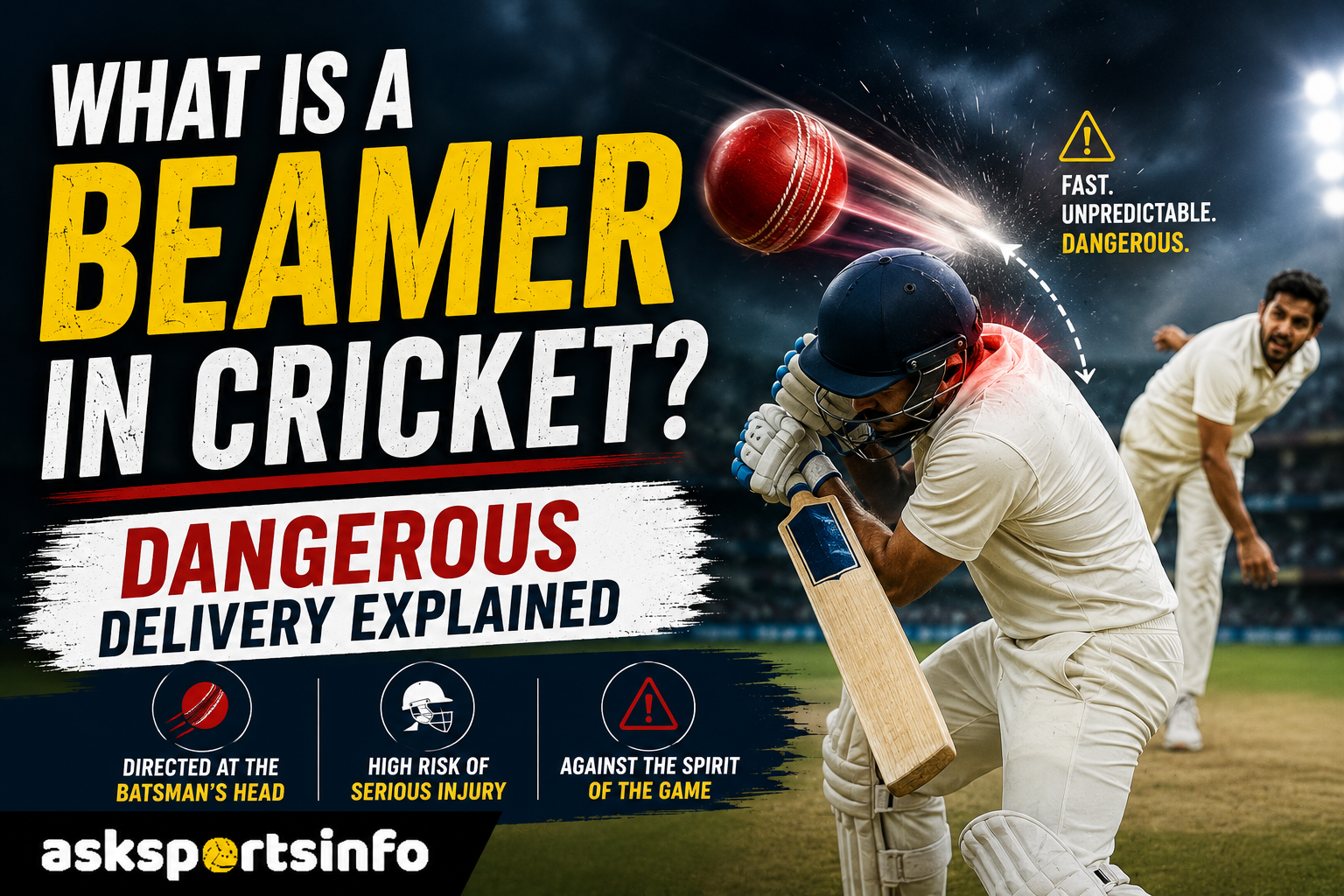
A beamer refers to any delivery that travels toward the batter’s head without bouncing first. The bowler deliberately or recklessly aims the ball high and hard, making the batter duck or jump to avoid contact. The ICC introduced specific regulations for beamers in 2017 to protect players from head and neck injuries during matches. Beamers differ fundamentally from other short-pitched deliveries because they don’t bounce before reaching the batter. A short-pitched ball bounces near the batter’s crease before reaching their head, giving them time to react. A beamer gives batters virtually no time to move. Understanding the difference between a beamer and what constitutes a bouncer or short-pitched delivery helps fans appreciate the umpire’s judgment calls during matches.How a Beamer Works — Step by Step
Understanding how a beamer develops during a match helps you recognize why umpires take immediate action.- The Bowler’s Release: The bowler releases the ball from their hand pointing directly at the batter’s head or neck area instead of toward the stumps. This happens either intentionally as retaliation or unintentionally due to poor control.
- The Ball’s Path: The ball travels in a flat trajectory without sufficient bounce. It moves directly toward the batter’s upper body at high speed, leaving minimal reaction time.
- The Batter’s Response: The batter must instinctively duck, sway, or jump backward to avoid being hit. This defensive action puts the batter in a vulnerable position where they cannot bat effectively.
- Umpire Assessment: The on-field umpire immediately determines whether this qualifies as a beamer by evaluating the ball’s height and trajectory. The umpire then applies the appropriate penalty under ICC Law 41.7, which covers detailed cricket rules and regulations.
- Penalty Application: The umpire issues either a warning to the bowler, runs to the batting team, or sends the bowler off the field depending on the severity and context of the delivery.
Key Rules You Must Know
The ICC Laws of Cricket (Law 41.7) and specific tournament regulations govern how umpires handle beamers in all formats.- Rule 1 – Definition and First Offense: The umpire calls a beamer when a fast short-pitched delivery reaches the batter at head height without bouncing. On the first offense in a match, the umpire gives the bowler an official warning and informs the captain.
- Rule 2 – Second Offense Consequences: If the same bowler delivers a second beamer in the same match, the umpire orders that bowler off the field immediately. The bowler cannot return to bowl for the remainder of the innings, severely impacting their team’s strategy.
- Rule 3 – Run Penalties and Format Differences: In Test cricket and ODIs, the batting team receives five penalty runs when a beamer occurs. In T20 cricket, teams receive five runs and the bowler receives a warning on their first offense, then removal on their second.
- Rule 4 – Deliberate Intent Considerations: Umpires examine whether the bowler deliberately aimed at the batter’s head or whether it resulted from a loss of control. Deliberate beamers result in faster punishment. Check the ICC official website for the complete Laws of Cricket documentation.
- Rule 5 – Head Gear Protection Requirements: All professional batters must wear protective helmets, and bowlers must respect this by not deliberately targeting the head area even with protected batters.
Real-World Example
During the 2019 World Cup, Pakistani bowler Mohammad Amir delivered a beamer at English batter Jason Roy during a crucial group-stage match at Old Trafford. Roy instinctively ducked and the ball flew past dangerously close to his head. The umpire called the delivery a beamer, issued an immediate warning to Amir, and awarded five penalty runs to England. This moment became a turning point because England’s momentum shifted with the extra runs and psychological advantage from Amir’s loss of control. Understanding how umpire decisions work in modern cricket shows why the on-field umpire made this call without needing video review. This example perfectly illustrates why beamer penalties exist—to protect batters from serious injury while maintaining competitive balance. Roy’s experience became a memorable lesson for young bowlers everywhere about respecting boundaries during high-pressure matches. Sports analysts across ESPN Cricinfo regularly reference this incident when discussing bowler discipline and pitch safety standards.Common Mistakes and Misconceptions
Many fans confuse beamers with bouncers, but they represent completely different deliveries with different rules. A bouncer is legal when bowled within specific limits—typically one per over in Test cricket and allowed in limited-overs formats. A beamer, however, never becomes legal no matter the format or situation. Another common mistake involves assuming the bowler always delivers beamers intentionally. Many beamers result from loss of control rather than deliberate aggression—wet conditions, tired bowlers, or miscalculation all cause accidental beamers. This distinction matters because umpires judge intent alongside the delivery itself. Learning about the complete framework of cricket rules helps you understand why umpires treat accidental and deliberate beamers slightly differently.Why This Matters for Your Fan Experience
Knowing what a beamer is transforms how you watch cricket because you’ll immediately recognize dangerous moments as they happen. When an umpire calls a beamer and issues penalties, you’ll understand exactly why that decision changes the match momentum. This knowledge lets you appreciate the umpire’s role in protecting player safety while maintaining fair competition. In the IPL and other South Asian cricket tournaments, beamer incidents spark intense debate among commentators and fans alike. Understanding the rules behind beamer penalties means you can form educated opinions during these discussions instead of relying on others’ explanations. When your favorite fast bowler controls their pace perfectly while still generating speed, you’ll appreciate the technical skill involved in avoiding beamer deliveries. This deeper understanding enhances every match you watch, whether it’s a local cricket game or a World Cup final, making the sport more engaging and meaningful.Frequently Asked Questions
Yes, a beamer is always illegal under ICC Law 41.7. The umpire calls it immediately and issues penalties regardless of whether the bowler delivered it intentionally or accidentally. No format of cricket permits beamers at any point in a match.
On the first beamer, the umpire warns the bowler and informs the captain. The batting team receives five penalty runs. If the same bowler delivers a second beamer in that match, the umpire removes them from bowling permanently for that innings.
Umpires assess the ball’s height and trajectory in real-time. A beamer must reach the batter at or above head height without bouncing first. The umpire also considers the bowler’s intent and whether they made a reasonable attempt to bowl toward the stumps.
The basic beamer definition remains the same across all formats. However, T20 cricket applies stricter enforcement because matches feature shorter durations with more aggressive fast bowling. The penalty system and removal criteria apply consistently across formats.
The ICC introduced Law 41.7 specifically to protect player safety from life-threatening head injuries. Several serious incidents in cricket history prompted officials to crack down on dangerous bowling. Modern cricket prioritizes player welfare above all other considerations.
